 Mekounone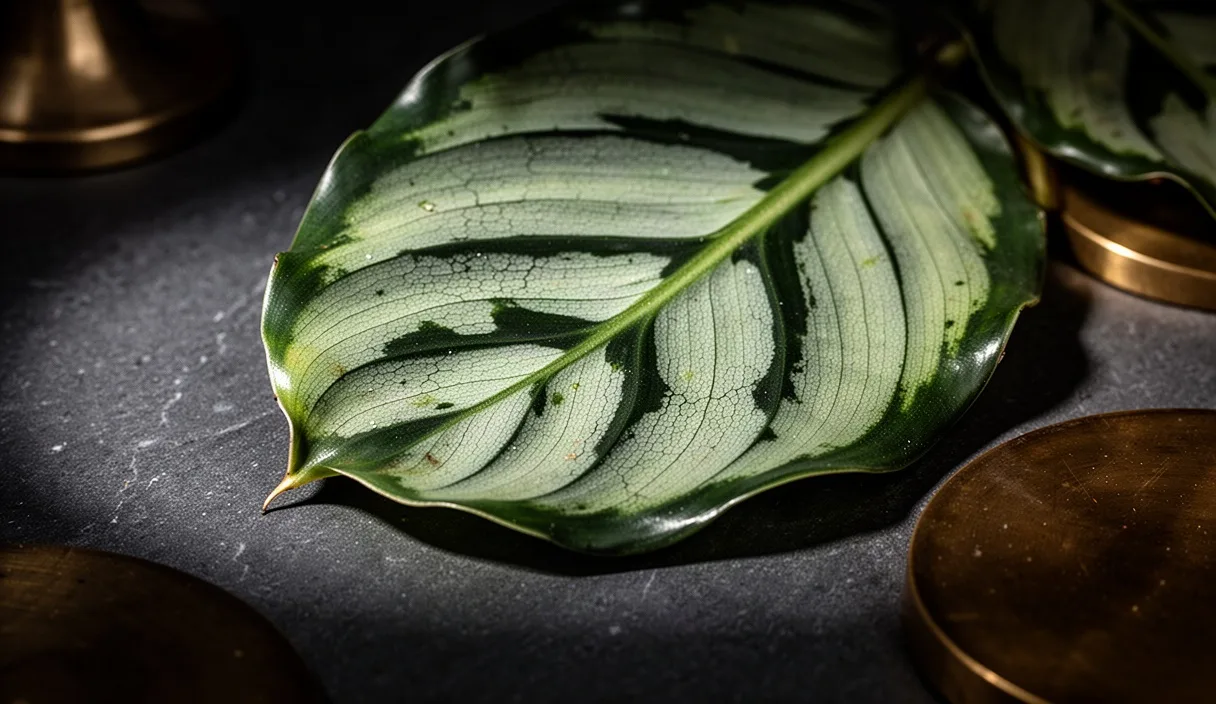
You will identify early signs of spider mite feeding before dense webbing forms across foliage. You can then apply systematic washing and contact treatments according to a precise biological schedule.

- Fine stippling on the upper leaf surface indicates early cellular damage caused by mite feeding.
- Mechanical washing under a pressurized water stream removes the majority of motile nymphs and adults.
- Contact treatments must be repeated every five to seven days to interrupt egg incubation cycles.
The two-spotted spider mite (Tetranychus urticae) is a common pest of indoor plants, protected greenhouse crops, and interior plantscapes. This arachnid feeds by piercing the epidermal cell layer of plant leaves and extracting the internal cellular contents. Early identification and precise mechanical intervention are necessary to manage infestations before feeding causes widespread defoliation.
Distinguishing Foliar Stippling from Fungal Lesions
Foliar stippling appears as a dispersed pattern of tiny chlorotic dots across the leaf surface, typically measuring between 0.2 and 0.5 millimeters in diameter. Each dot marks an individual cell evacuation site caused by mite stylets. In contrast, fungal lesions, such as those caused by Alternaria or Cercospora, present as necrotic patches that expand outward with irregular margins, often exhibiting distinct concentric rings or yellow halos. Mite feeding concentrates primarily on the upper and lower leaf surfaces near major veins, accompanied by fine, silken webbing across leaf axils. Fungal blights lack this webbing, and fungal tissue often feels soft or papery rather than mechanically abraded. Confirm the diagnosis by tapping an affected leaf over a white sheet of paper; dislodged mites appear as slow-moving specks roughly 0.4 millimeters in length.
Mechanical Washing and Physical Isolation Protocols
Upon confirmation, immediately isolate the affected specimen by a distance of at least two meters from neighboring plants, or relocate it to a dedicated containment room. Spider mites spread readily on air currents and through direct leaf-to-leaf contact. Quarantine the plant for a minimum of 21 days while executing treatment protocols, and inspect adjacent plants within a three-meter radius for latent stippling.
Rinse the plant thoroughly with a directed stream of lukewarm water at a temperature between 18 and 22 degrees Celsius. Direct the spray upward to reach the lower leaf surfaces, where the highest concentrations of eggs and mobile stages reside. Mechanical washing dislodges active nymphs and adult females while stripping away webbing that shields eggs from contact treatments. Allow the foliage to dry in an area with active air movement to prevent secondary fungal colonization.
Follow the mechanical rinse with an application of horticultural soap containing potassium salts of fatty acids, formulated at a concentration of 1.5 to 2.0 percent in clean water. Horticultural soaps disrupt the insect cuticle and cause rapid desiccation upon direct contact, but they offer no residual activity once dry. Wet all leaf surfaces to the point of runoff. Because certain genera, including Adiantum (maidenhair ferns) and Begonia, exhibit sensitivity to fatty acid solutions, test the mixture on two individual leaves 48 hours prior to full-canopy treatment.
Environmental regulation further suppresses population growth by prolonging the developmental cycle of Tetranychus urticae:
- Maintain relative humidity levels between 60 percent and 70 percent, which reduces egg hatch rates and nymph survival.
- Keep ambient temperatures below 24 degrees Celsius, as development from egg to adult accelerates sharply above 28 degrees Celsius.
- Ensure continuous, gentle air movement using an oscillating fan set to low speed, preventing hot, stagnant microclimates where colonies multiply rapidly.
Repeat visual inspection using a 10x or 15x hand lens every four days across a three-week monitoring interval to detect emerging larvae. If mite populations persist despite mechanical rinsing, soap applications, and microclimate adjustment, consult a certified horticulturalist or regional agricultural extension agent to evaluate targeted biological controls, such as predatory mites (Phytoseiulus persimilis).
This documentation serves educational purposes; consult an accredited horticulturist or agricultural extension service for severe quarantine pests or structural plant risks. Disclaimer